Halloween Skeleton Band Embroidery Review
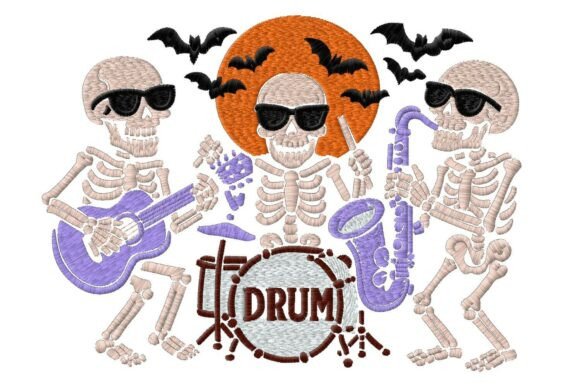
When I first opened the file for Halloween Skeleton Band Embroidery, my initial reaction was a genuine smile. In a sea of generic jack-o'-lanterns and spooky ghosts, this design stands out because it has personality. It isn't just a scary image; it is a scene. The concept of skeletons jamming together under a full orange moon creates an immediate narrative that feels both playful and professional. As someone who spends hours testing digital assets before putting them on a finished product, I am always looking for designs that translate well from screen to fabric. This piece offers a vibrant mix of humor and music that could elevate a simple tote bag into a conversation starter.
The First Impression: Mood and Layout
The visual personality of this design is its strongest asset. The layout suggests a band setup, likely with instruments like guitars clearly defined by detailed stitching. For an embroidery designer, the appeal lies in how the elements are balanced. There is enough negative space around the figures to prevent the design from feeling cluttered, yet the details are tight enough to hold interest. The "full orange moon" mentioned in the description provides a perfect backdrop element that can be rendered effectively using fill stitches or satin stitches depending on the file structure.
It feels natural to imagine this design on a custom sweatshirt for a local Halloween party or as a unique patch for a denim jacket. The theme is festive without being overly dark, making it suitable for a wide range of audiences, from children's clothing to adult apparel. When you look at the composition, it screams "handmade," which is crucial for Etsy sellers and boutique owners trying to differentiate their inventory from mass-produced items found in big-box stores.
Real-World Application: From Screen to Stitch
I recently put this design through a practical test scenario involving a custom embroidered tote bag for a holiday gift market. The goal was to create a product that felt personal but also had high perceived value. Using Halloween Skeleton Band Embroidery on a canvas tote proved to be an excellent choice. The size of the band allowed for a central placement that didn't overwhelm the bag's dimensions.
In this context, the design performed well. The contrast between the skeleton figures and the background fabric was sharp, ensuring the details remained visible even after washing. However, the success of this project relied heavily on selecting the right thread colors. If the skeletons were stitched in white thread against a light beige bag, the design would have lost its pop. By choosing a dark grey or black thread for the bones and a bright orange for the moon, the vibrancy matched the digital preview perfectly.
This same logic applies to other products like aprons, pillow covers, or baby onesies. On a baby item, the playful nature of the skeletons makes it a great alternative to traditional animal motifs. For a commercial embroidery project, such as a batch of hats for a craft fair, the design's clarity ensures that customers recognize the art instantly. It works particularly well for small shop products where branding relies on unique, eye-catching graphics rather than standard logos.
Where Caution is Required
While this is a versatile design, it is not without its challenges. One must be careful when considering small hoop sizes. If the original file includes intricate details in the corners of the instrument or fine lines on the ribbons, shrinking the design down might cause those elements to merge into solid blobs of thread. Before committing to a run of embroidered patches or cap brims, I strongly advise checking the minimum recommended dimensions.
Fabric texture is another critical factor. Stretchy fabrics like jersey knits require extra attention. If you attempt to stitch this on a thin, stretchy t-shirt without proper stabilizer, the tension of the satin stitches could cause the fabric to pucker, distorting the shape of the band members. Similarly, textured fabrics like heavy fleece or corduroy might hide the finer details of the guitar strings or facial features of the skeletons. In these cases, a smoother fabric surface yields the best results.
Dense stitch areas are common in fill-heavy designs like this one. If the design uses a high density for the orange moon or the background, it can become stiff. For a wearable item like a sweatshirt, a slightly softer hand feel is often preferred so the garment remains comfortable. Always review the stitch density settings in your digitizing software or ask the provider for adjustments if the design feels too rigid for the intended application.
Technical Notes for Designers
Before you start stitching, there are several practical steps to ensure your embroidery project goes smoothly. First, test the design on scrap fabric. This allows you to see how the threads interact with the material and whether any color combinations need tweaking. Check the thread color contrast carefully; sometimes a color that looks good on a monitor appears muddy on fabric due to lighting conditions.
Inspect the small details closely. Are the eyes of the skeletons distinct? Is the guitar neck clear? If you plan to use this for commercial embroidery or sell finished items, these details define the quality of your work. Use proper stabilizer to support the fabric during stitching, especially if you are working on curved surfaces like caps or hats where the machine needs to navigate a non-flat plane.
Another vital step is to test the design in black and white mockups. This helps verify that the value contrast (light vs. dark) is sufficient for the design to be readable even if printed on a monochrome flyer or viewed in grayscale. Compare the look on light and dark fabric backgrounds to decide which variations will sell best in your store.
Impact on Product Value and Brand Trust
Using a well-executed design like Halloween Skeleton Band Embroidery directly influences customer trust. When a buyer receives a personalized gift or a handmade product with clean, crisp stitching, they perceive higher value. The design acts as a visual promise of quality. If the stitching is messy or the details are lost, the entire brand suffers.
For Etsy sellers and creative entrepreneurs, this design offers a way to create cohesive collections. You can use the skeleton band motif across different items—tote bags, kitchen towels, and nursery decor—to build a recognizable aesthetic. The humor inherent in the design encourages engagement; people love sharing photos of funny, quirky items on social media, which serves as free marketing for your craft business.
However, remember that licensing matters. If you intend to sell the finished products, confirm that the license terms allow for commercial use. Some digital files are for personal use only. Ensure you have the rights to produce design assets for resale. Once confirmed, this file can be a staple in your library for seasonal promotions.
Final Thoughts on Practicality
Halloween Skeleton Band Embroidery is more than just a seasonal graphic; it is a functional tool for creators who want to add flair to their work. It balances artistic expression with technical feasibility, provided you respect the limitations of the medium. Whether you are creating a unique embroidered patch for a client or stocking up on holiday embroidery gifts for your shop, this design delivers on its promise of fun and style.
By taking the time to test the stitch density, choose the right fabrics, and plan the placement, you can transform a simple digital file into a premium finished product. It is a reminder that good design is not just about how it looks on a screen, but how it holds up in the real world of needle and thread. For anyone looking to add a touch of musical mischief to their Halloween collection, this is a solid choice worth the investment of time and materials.